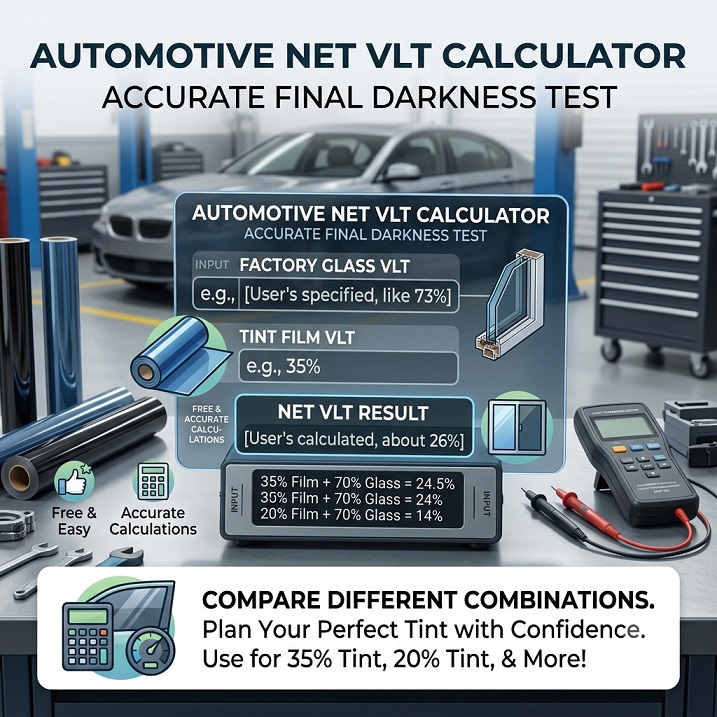
If you have ever looked at a window tint percent chart, you have probably noticed that the number on the film box is not the whole story. A 35 percent film does not make your glass 35 percent clear, because the glass already blocks some light before the film goes on. This page explains how the two numbers combine and gives you a calculator that shows the final result.
The short version: enter the factory glass number and the film number, and the calculator returns the net light that actually gets through.
What VLT Means in Plain Words
VLT stands for visible light transmission. It is the share of visible light that passes through the glass, written as a percentage. A higher number means more light gets through, so the glass looks lighter. A lower number means less light gets through, so it looks darker.
People often say “35 percent tint” when they mean a film with a VLT of 35 percent. In everyday talk the words tint percent, VLT and film shade all point at the same idea. The calculator on this page uses the VLT wording because that is the number printed on most films.
Why the Number on the Film Is Not the Final Number
Most car glass is not perfectly clear. Even the untinted windows leave the factory with a VLT somewhat below 100 percent, and some vehicles have rear windows that are already darkened. When a film is added, the light has to pass through both layers, one after the other.
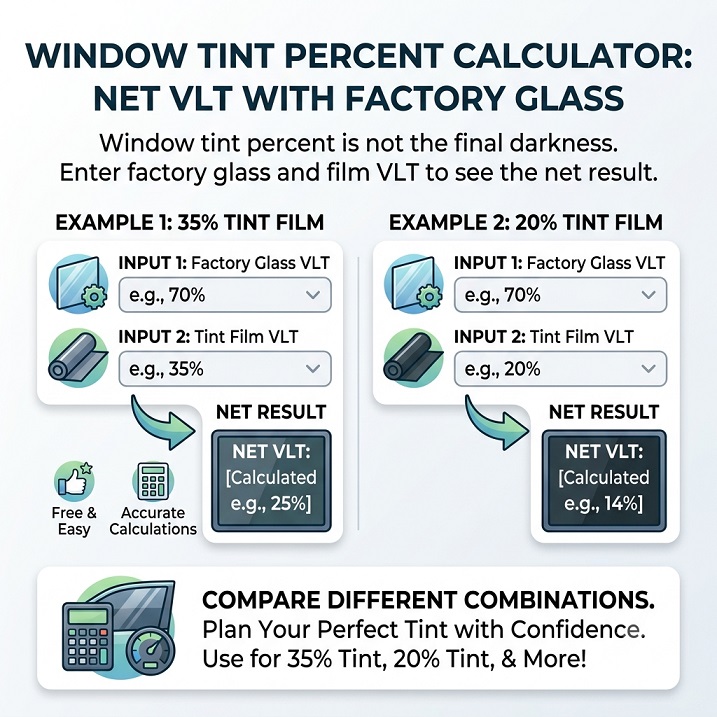
That is why the combined result is always lower than both numbers. A 35 percent film on glass that already lets 75 percent through ends up near 26 percent, not 35. In words, each layer lets only part of the light pass, and the second layer only gets what the first one allowed.
The mistake people make most often is choosing a film by its printed number and expecting that number on the finished window. If you are comparing a 35 percent tint with a 20 percent tint on a car, check the net result for both before you decide.
Try the Window Tint Percent Calculator
Enter the VLT of your factory glass and the VLT of the film you are considering. The result updates as you type. It is an estimate for planning, not a measurement of a real window.
- Factory glass VLT: how much light the untinted glass lets through. The calculator suggests about 70 to 85 percent for standard clear glass. Your own glass may differ, especially on rear windows.
- Aftermarket film VLT: the number printed on the film you are looking at.
🪟 Window Tint Net VLT Calculator
Calculate your combined window tint light transmittance instantly.
Example: Factory Glass at 75 Percent
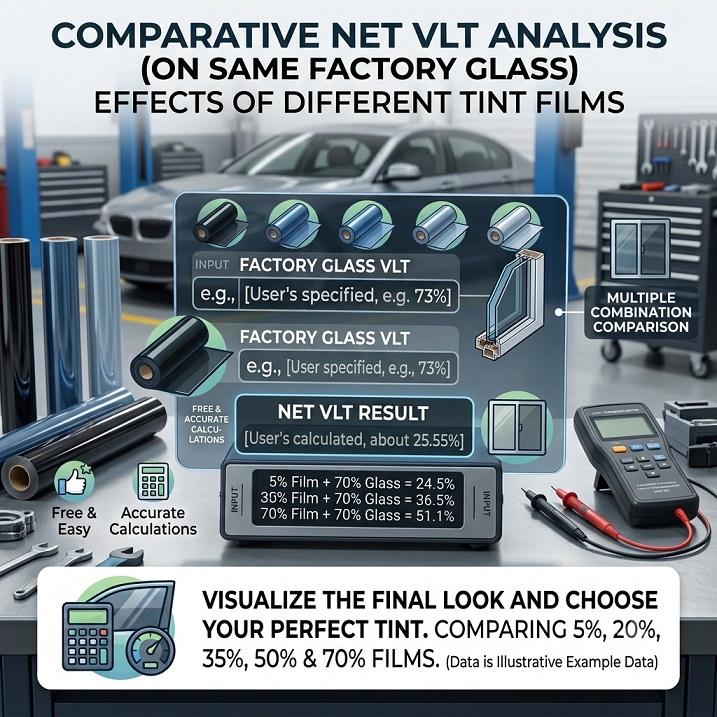
The calculator opens with factory glass at 75 percent and a film at 35 percent, which gives a net VLT of about 26 percent. Here is the same factory glass with several common film shades:
| Film VLT | Net VLT on 75% glass |
|---|---|
| 70% | 52.5% |
| 50% | 37.5% |
| 35% | 26.2% |
| 20% | 15.0% |
| 5% | 3.8% |
Notice how quickly the numbers fall. A film that sounds only a little darker, such as 20 instead of 35, takes the net result from about 26 percent to 15 percent.
The factory glass number matters too. Here is the same 35 percent film on four different glass values:
| Factory glass VLT | Net VLT with 35% film |
|---|---|
| 70% | 24.5% |
| 75% | 26.2% |
| 80% | 28.0% |
| 85% | 29.8% |
VLT Tint Levels in Everyday Terms
These are general descriptions, not official categories, and how dark a number looks depends on the glass, the color of the film and the light around you:
- 70 percent: very light. Often used when someone wants a film for heat or sun protection without much change in look.
- 50 percent: light to medium. Noticeable, but you can still see inside easily in daylight.
- 35 percent: a medium shade, and one of the most commonly searched numbers. A 35 percent tint is a popular middle ground between looks and visibility.
- 20 percent: dark. Putting 20 percent tint on car windows gives clear privacy from outside during the day, and it takes more care at night.
- 5 percent: very dark. Seeing out at night can be difficult.
35 Percent Windshield Tint and Local Rules
Questions about 35 percent windshield tint come up a lot, and the honest answer is that it depends on where you live. Rules about window film differ between countries, states and even window positions, and the windshield is often treated differently from the side and rear windows. Some places limit the shade, some allow film only on a strip at the top and some do not allow it at all.
For that reason, this page does not list legal limits. Check your local regulations for the exact windows you plan to tint, and ask the installer what the rules are where you live before choosing a number. The calculator tells you the net VLT, but it does not tell you what is permitted.
Before You Choose a Film
A few practical habits help you avoid a result you do not like:
- Find your factory number. Do not assume. If you can, ask the installer to measure your glass with a VLT meter before and after.
- Think about night driving. A dark result that looks great in the daytime may feel too dark in a dimly lit street.
- Check each window separately. Rear windows and side windows can have different starting values, so the same film can give different results.
- Compare samples in person. A sample held up to real glass tells you more than a number on a screen.
- Ask about the warranty and rules. Check what the film warranty covers and what your local rules allow.
What to Do Next
If you want to put lettering on a tinted rear window, our guide to applying vinyl decals to car windows covers the steps. Dark glass also changes how a decal color looks, so see how others do it with the iPhone status bar rear window decal template. For bigger vinyl jobs, the car vinyl wrap calculator helps you plan how much film you need.
A Note on What This Article Is Based On
To keep this honest: the example numbers in both tables come straight from the calculator’s own logic, which multiplies the two percentages. The descriptions of shade levels, night visibility and installer habits are general window tint knowledge, not a claim about any particular film brand, installer or vehicle. We do not list legal limits and we do not quote prices, because both vary by place and change over time.
Frequently Asked Questions
1. What does window tint percent mean?
It is the share of visible light that passes through the glass, also called VLT. A lower percentage means a darker window.
2. Is 35 percent tint really 35 percent dark?
Not exactly. A 35 percent film lets 35 percent of the light through the film itself, but the factory glass also blocks some light. On glass at 75 percent, the combined result is about 26 percent.
3. How do I find my factory glass VLT?
The calculator suggests about 70 to 85 percent for standard clear glass, but your vehicle may differ. The reliable way is to have an installer measure it with a VLT meter.
4. Is 20 percent tint too dark for a car?
It depends on your glass, your local rules and how you drive. It gives strong privacy during the day, and many drivers find it harder to see out at night. Check your local rules before you choose.
5. Can I use this calculator for home windows?
The math is the same for any glass and film, because it combines the two VLT numbers. Use the glass number that matches your own window and film.
Explore Related Guides & Utilities
👉 Letter Spacing & Kerning Helper for Vinyl Lettering Calculator
👉 Roll Length Calculator for Vinyl: How Much to Order
👉 How to Safely Remove Old Car Stickers Without Damaging Paint
※ LICENSE & TERMS OF USE
- Personal Use Only: This vector file is provided strictly for personal DIY projects and non-commercial purposes.
- Modification Allowed: You are free to edit, resize, or modify this file for your own personal use.
- No Commercial Sale: Mass production, selling physical items made with this file, or any commercial exploitation is strictly prohibited.
- No Redistribution: You may not re-upload, share, or resell the digital files (SVG/AI) on any other platform.
DISCLAIMER
This file is provided "AS IS" without warranties of any kind. DVG (Detail Vector Garage) assumes no responsibility or liability for any trademark, copyright, or legal issues arising from the use of this file.